Curative Birth to Three
Developmental Skills Hiding in Plain Sight: 7 Everyday Household Activities to Try at Home
You don't need fancy toys or complicated activities to help your little one learn. Everyday moments at home can create opportunities to explore, communicate, move, problem-solve and build new skills.
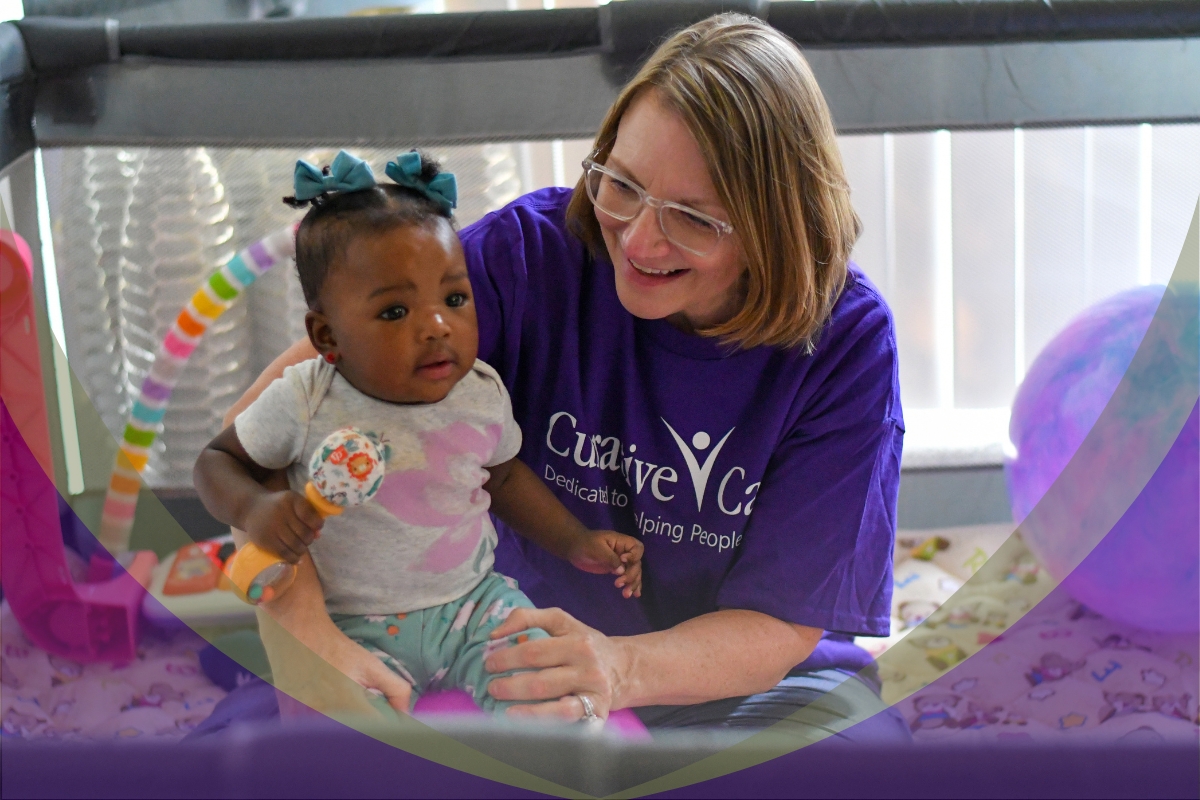
Some of the best learning opportunities don't look like learning at all. They happen while sorting laundry, playing with a cardboard box, exploring kitchen utensils or singing a familiar song together.
During the first three years of life, children are constantly discovering how their world works. Through everyday play and interactions with the people around them, they have opportunities to practice movement, communication, thinking, social interaction and other developing skills.
The good news? You probably already have everything you need. Here are seven simple developmental activities for babies and toddlers that use common household items and everyday routines.
Every child develops at their own pace. Think of these activities as opportunities to explore together, rather than milestones your child needs to complete.
1. Fill, Dump and Repeat with Household Containers
Fine Motor Skills Problem-Solving Cause and Effect
What you'll need: A few large, lightweight, unbreakable containers and large, age-appropriate objects.
Give your child a container and a few safe objects to explore. Show them how to put an object inside, dump everything out and start again. You can also use two containers to practice moving objects from one to the other.
This simple activity gives little hands opportunities to practice reaching, grasping, releasing and coordinating movements. Children also begin exploring cause and effect as they discover what happens when a container tips over or an object disappears inside.
Make it interactive: Narrate what your child is doing. Try phrases such as "in," "out," "more" and "all gone." Pause to give your child time to respond with a sound, gesture or movement.
2. Build a Little Obstacle Course with Pillows
Gross Motor Skills Balance Body Awareness
What you'll need: Firm floor cushions or pillows and a clear, safe floor space.
Place a few low cushions on the floor and encourage your child to explore moving around them, reaching over them or stepping across a small obstacle when developmentally appropriate. Younger babies can practice reaching for a favorite toy while playing on a firm, safe surface.
These playful challenges offer opportunities to practice coordination, shifting weight, changing positions and exploring different movements.
Make it interactive: Place a favorite toy within comfortable reach and encourage your child to move toward it. Celebrate their exploration, whether they reach, roll, crawl, scoot or walk.
3. Turn Snack Prep into a Language Lesson
Language Development Social Interaction Early Thinking Skills
What you'll need: A few familiar, safe items during a caregiver-led daily routine.
Everyday routines are full of opportunities to build communication skills. While preparing a snack or getting ready for a meal, name familiar items, describe what you're doing and respond to your child's sounds, facial expressions, gestures and words.
You might say, "Here is your cup," "Let's wash our hands" or "Would you like more?" For children who are beginning to use words, repeat their attempts and add a little more language. If your child says "ball," for example, you might respond, "Yes, a big ball!"
Make it interactive: Give your child time to respond. Communication can include looking, pointing, reaching, making sounds, using gestures or speaking. You don't need to turn every moment into a quiz; following your child's lead can make the interaction more natural.
4. Make Music with Pots, Pans and Wooden Spoons
Listening Imitation Coordination
What you'll need: A sturdy plastic bowl or other safe sound-making object and an appropriate soft utensil.
Create a simple rhythm by tapping, clapping or singing. Pause and see whether your child looks toward the sound, moves along, makes a sound of their own or tries to imitate you. Take turns making sounds and responding to one another.
Musical play offers opportunities to practice listening, attention, imitation, timing and interaction. It can also introduce concepts such as loud and quiet, fast and slow.
Make it interactive: Sing a familiar song and pause before a repeated word or sound. Give your child time to join in however they can.
5. Turn Laundry into a Sorting Game
Thinking Skills Fine Motor Skills Following Directions
What you'll need: A few large, clean clothing items, such as washcloths or shirts, and a low laundry basket.
Invite your child to help place clothing into a basket or move items from one safe location to another. Older toddlers may enjoy grouping similar items together, such as two washcloths or two shirts.
As children explore, they have opportunities to practice grasping, releasing, comparing, matching and following simple directions. The activity can also introduce early concepts such as same, different, big and small.
Make it interactive: Keep directions simple. Try "Put it in," "Find another sock" or "Let's put these together." Follow your child's interest and let them explore at their own pace.
6. Discover What's Inside a Cardboard Box
Curiosity Problem-Solving Object Exploration
What you'll need: A clean, sturdy cardboard box with no staples, loose tape, sharp edges or small detachable parts.
Place a familiar toy inside an open box and encourage your child to find it. You can also use the box as a pretend play space, a place to put toys or an object to explore from different angles.
Your child may reach inside, look around the sides, move the box or try different ways to retrieve the toy. These experiences offer opportunities to explore object permanence, spatial relationships and simple problem-solving.
Make it interactive: For a younger child, keep the toy partly visible and easy to reach. For an older toddler, place it just out of immediate view and let them decide how to find it.
7. Create a Book and Storytime Routine
Communication Attention Social Connection
What you'll need: A sturdy board book or a familiar picture book.
You don't need to read every word on every page. Point to pictures, name familiar objects, imitate animal sounds or describe what you see. Let your child turn pages, point to pictures or return to a favorite page.
Shared book time creates opportunities to hear new words, connect words with pictures, take turns and share attention with a caregiver. It can be a few minutes before bedtime or a quick break during the day.
Make it interactive: Follow your child's interests. If they point to a dog, you might say, "You found the dog! The dog says woof!" Leave room for your child to respond in their own way.
Remember: Everyday moments count.
You don't need to set aside a full hour for developmental play. Talking while getting dressed, singing during bath preparation, sharing a book or playing on the floor together can all create meaningful opportunities for connection and learning.
How to Make Everyday Play Work for Your Child
The most helpful activity is one that fits your child's interests, current skills and comfort level. Here are a few ways to keep everyday learning enjoyable:
- Follow their lead. Notice what catches your child's attention and build on it.
- Keep it simple. One container, one toy or one familiar song can be enough.
- Give them time. Allow your child to explore and respond without rushing to complete the activity for them.
- Adapt as needed. Offer objects that are easier to grasp, simplify the activity or provide extra support based on your child's needs.
- Make connection the priority. Respond to your child's communication, share in their discoveries and enjoy the moment together.
A quick note about safety
Always supervise babies and toddlers closely during play. Avoid small objects that can cause choking, including loose buttons, coins, bottle caps, small food items and other detachable pieces. Keep plastic bags, cords, magnets, batteries, sharp utensils and breakable items out of reach. Avoid heavy containers, unstable furniture and elevated obstacle courses.
Choose activities appropriate for your child's age and abilities, and follow safe-sleep guidance for infants. Never leave a baby unattended on a raised surface.
When Can Birth to Three Services Help?
Children develop at different rates, and families may have questions about how their child moves, communicates, learns, interacts with others or manages everyday activities. If you have concerns about your child's development, you don't have to navigate those questions alone.
Curative's Birth to Three services support eligible children from birth to age three and their families through early intervention and individualized developmental goals. Depending on a child's needs, the team may include a family service coordinator, physical therapist, occupational therapist, speech-language pathologist or early childhood education teacher.
Support can take place in familiar environments, including the home, child care setting, neighborhood library or another location selected with the family and therapist. This can help families practice developmental strategies as part of their everyday routines.
Learn more about eligibility and enrollment through the Wisconsin Birth to 3 Program . In Milwaukee County, families can contact the Disability Services Division intake line at 414-289-6799 for enrollment information.
Small Moments Can Help Build Big Skills
From stacking containers to sharing a favorite story, everyday experiences give children opportunities to explore, connect and learn. And if you have questions about your child's development, Curative is here to help you learn about available support and next steps.
Explore Birth to Three Learn About Wisconsin Birth to 3
Frequently Asked Questions
What are some developmental activities I can do with my toddler at home?
Try sorting laundry, stacking safe containers, singing songs, exploring cardboard boxes, sharing books and talking during daily routines. Choose activities that match your child's interests and current abilities.
What household items can help support early childhood development?
Safe, everyday items such as large containers, washcloths, cardboard boxes, sturdy board books and appropriate musical objects can offer opportunities to practice communication, movement, coordination and problem-solving. Adult supervision is essential.
What is the Wisconsin Birth to 3 Program?
Wisconsin's Birth to 3 Program provides early intervention for eligible children under age three with developmental delays or qualifying conditions. Families can learn more through the Wisconsin Department of Health Services .
How do I learn more about Curative's Birth to Three services?
Visit the Curative Birth to Three services page for program information. For Milwaukee County enrollment questions, call the Disability Services Division at 414-289-6799.